
Renoir: Master of Art and Happiness
Intimate Exploration of Dance in the City and Renoir’s Artistic Legacy
Faluns Of Anjou Arts
Dive into the luminous and enchanting universe of Impressionist painting with Renoir’s Dance in the City a captivating masterpiece that celebrates the joy of living and the pleasures of urban society in the 19th century. Through vibrant colors and graceful movements of the characters, Renoir transports us into a world where dance becomes a symbol of freedom and artistic expression.
How does Renoir, as an Impressionist painter, manage to capture the diversity and richness of urban life through the various facets of Dance in the city? How does this work reflect Renoir’s different artistic styles, as well as the social and cultural trends of his time?
Context:
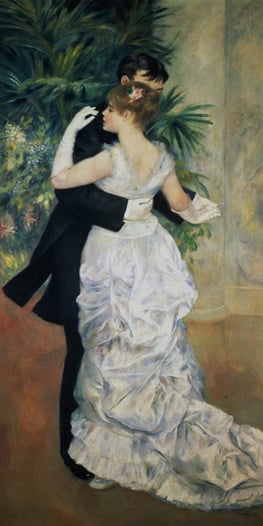
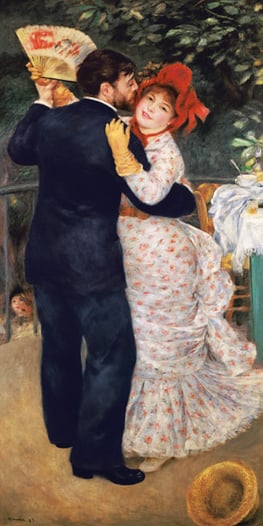
How does Renoir blend modernity and classicism in his art? Auguste Renoir, one of the most prominent Impressionist painters, focuses primarily on representing the human figure. In 1883, Paul Durand-Ruel, a collector and art dealer, commissions Dance in the city, a pendant to Dance in the country, which he exhibits in his salon. Preserved today at the Musée d’Orsay, these two masterpieces illustrate the joy of life among the middle and lower classes during the Impressionist era.
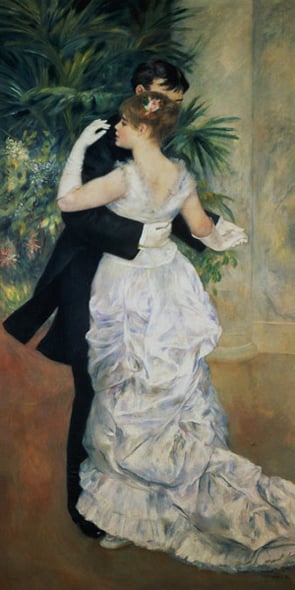
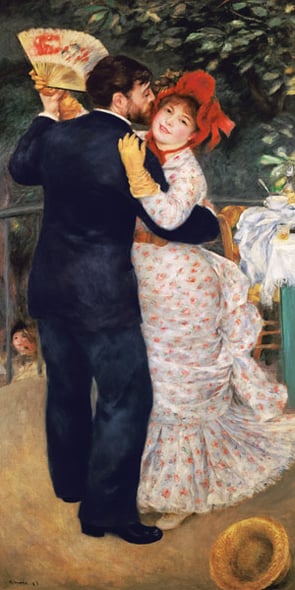
Dance in the City
Dance in the Country
I. Renoir: A Craftsman of Happiness, a Multistyle Palette
Renoir, painter of happiness:
Having entered the Gleyre Academy at the age of 20, Renoir met Sisley and Monet and turned towards Impressionism from 1869. He favored light and color over drawing, painting outdoors to capture the effects of natural light.
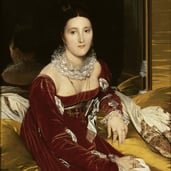
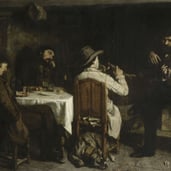
His landscapes, characterized by visible brushstrokes, reflect the movement and vibrancy of light. Then, turning to the depiction of the human figure, he immortalized his family and friends. Dubbed “the painter of happiness,” he returned to drawing, inspired by classical masters like Raphael and Ingres, as well as Courbet’s realism and Delacroix’s passion.
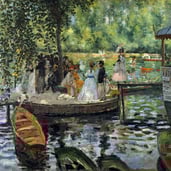
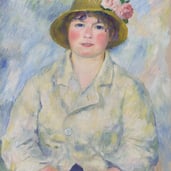
The Grenouillère
His family and friends
Portrait of Madame de Senonnes
Multiple styles in one artwork:
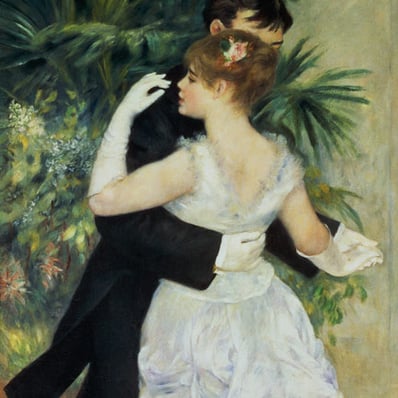
In Dance in the City, the floral composition in the foreground recalls Renoir’s Impressionist period, as do the modern choices in color shades and motion effects. However, by 1883, drawing regained its prominent place in his work, with precise contours and a smoother execution, inspired by classical masters.
Renoir and friends
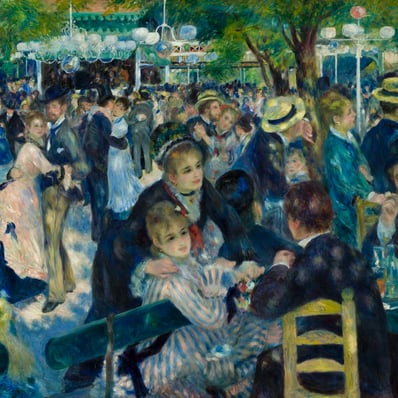
II. Famous Figures at the Ball: A Social Ritual
Famous models:
Marie Clémentine, also known as Suzanne Valadon, was born in 1865. After a career as a trapeze artist and dancer, she became a model following an accident. She posed for many renowned artists such as Puvis de Chavannes, Renoir, Steinlen, Henner, and Lautrec. Because she posed for older artists, Toulouse-Lautrec humorously nicknamed her Suzanne, referencing the biblical story of “Susanna and the Elders.”
She then became her student and her protege, gradually beginning to try her hand at drawing and painting. Highly sought after, she gave birth to Maurice Utrillo in 1883. The male dancer in the artwork could be Paul Lhote (1850-1894), a friend of Renoir’s. A confirmed seducer, he often posed for Renoir and even attended his wedding to Aline Charigot, the female model in Dance in the Country, in 1890. The couple had three children: Pierre, an actor (1885-1952), Jean, a filmmaker (1894-1979), and Claude, a ceramist (1901-1969).
Dance in the City
Bal au Moulin de la Galette in Montmartre - Pierre-Auguste Renoir
The ball, a social practice:
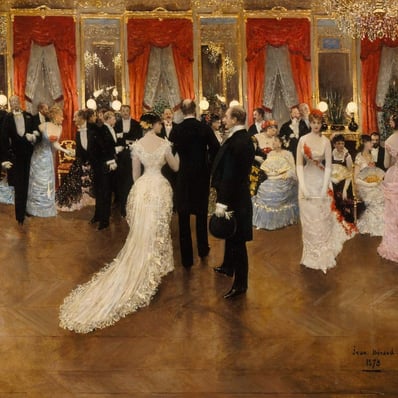
In the 19th century, the ball was a favored activity across all social classes. Private balls, reserved for the elite, took place in the luxurious salons of private mansions or government buildings. Meanwhile, public, paid balls were organized in gardens, notably on the Champs-Elysées (such as the Bal Mabille). Popular dances included the waltz, polka, and mazurka. During the Second Empire, the guinguettes along the Seine and Marne attracted the working class and artists, evolving into musette balls where dances like the boston, matchiche, and cake-walk were practiced. Each social category frequented balls suited to their tastes: students danced at neighborhood balls, civil servants for their careers attended prefectural balls, while debutante girls appeared in luxurious salons.
10. The guinguettes. 11. A luxurious salon
III. The Crucial Role of Durand-Ruel
Paul Durand-Ruel initially considered a career in the military or as a missionary, but ultimately took over his father’s shop out of duty. In this shop, he sold supplies to often impoverished artists, occasionally exchanging these supplies for paintings. He also acquired works by great artists such as Géricault and Delacroix, which he offered for rent to a bourgeoisie wanting to impress their guests, or to young artists eager to copy them. Durand-Ruel played a key role in promoting the painters of the Barbizon school, organizing exhibitions that were highly successful.
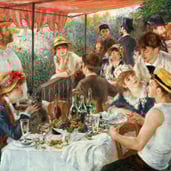
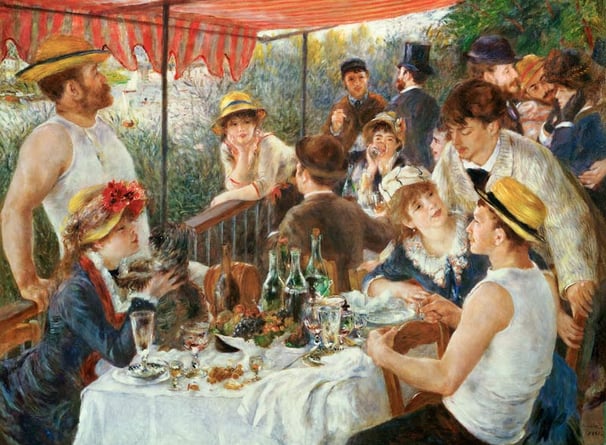
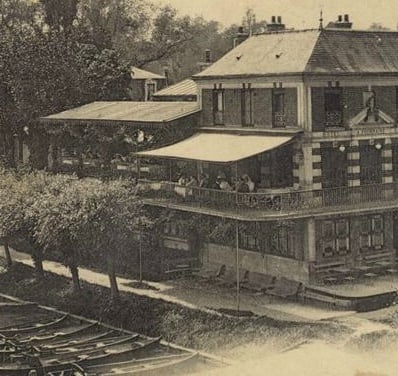
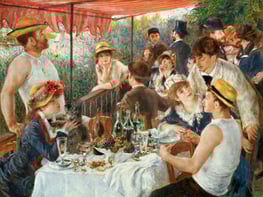
By becoming an art dealer, he developed an innovative method of raising artists’ profiles by offering them exclusivity for their work. In exchange for a monthly stipend, he bought all their production and regularly organized monographic exhibitions in his gallery. His salon, as well as his apartment near the Saint-Lazare train station, were open to visitors for free, where they could admire works such as “Dance in the City” and “Dance in the Country,” as well as “Luncheon of the Boating Party” in his dining room.
Durand-Ruel maintained almost familial relationships with his artists, and one of his sons became the godfather of the famous filmmaker Jean Renoir, the painter’s son. Renoir expressed eternal gratitude to Durand-Ruel for his love of art and his defense of artists during their lifetimes, stating: No matter what they [the public, the press, and the dealers] do, they will not kill your true quality: the love of art and the defense of artists before their death.
Dance in the City
Dance in the Country
Renoir’s Dance in the City plunges us into a whirlwind of colors and movements, masterfully illustrating the diversity of urban life and Renoir’s artistic mastery. Through its various styles and social themes, this work remains a vibrant testament to Impressionist art and its impact on society.
By celebrating the beauty of dance and urban life, Renoir reminds us of the importance of seizing each moment with wonder and gratitude. “Dance in the City” invites us to immerse ourselves in the magic of art and to appreciate the richness of our cultural heritage.
Explore further the world of Renoir and Impressionist art by visiting museums and art galleries, or by joining dance classes to experience the joy of movement. Join us in this artistic exploration and share your discoveries with the world!
#Renoir #Impressionism #DanceintheCity #UrbanArt #FrenchCulture #Painting #JoyofLiving
After Dinner at Ornans
Renoir and friends
Renoir and friends
