
Steel and Legends: A Journey to the Heart of Medieval Swords and Charlemagne’s Blade
Dive into the sharp world of the Middle Ages and uncover the secrets of royal and knightly swords that shaped French history.
Faluns of Anjou Arts
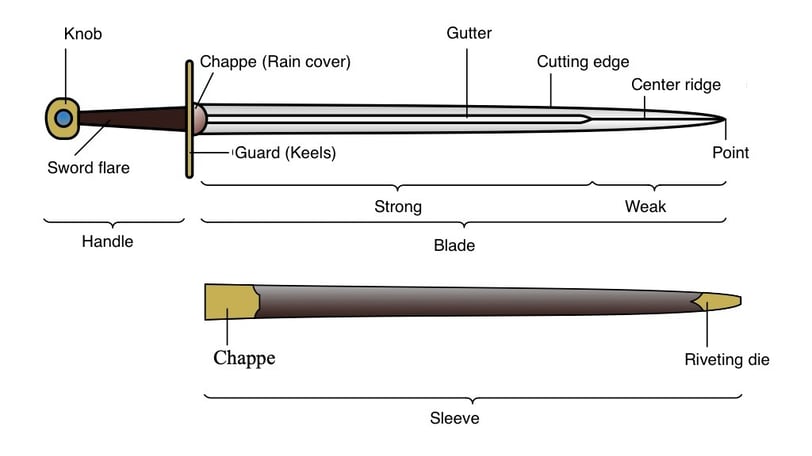
The medieval sword, more than just a weapon of war, stands as a potent symbol of power, justice, and nobility throughout the Middle Ages. These blades, crafted with artistry and technique refined over centuries, were not limited to martial function; they were also emblematic of chivalry, faith, and honor. From the rudimentary gladius of early days to the elaborate two-handed swords of the era’s end, the evolution of the sword in the Middle Ages reflects the technological, social, and political changes of this captivating period.
The evolution of the sword in the Middle Ages, its reflection, and its chivalric values. What role did the legendary sword of Charlemagne, the King of France, play in European mythology and collective imagination?
I. The History and Form of the Sword in the Middle Ages.
The Evolution and Variants of the Sword Through the Ages
The origins of the sword date back to the Bronze Age, around the third millennium BCE, when these weapons took on their initial forms. Their design was refined with the advent of iron metallurgy, which provided increased strength and flexibility. From the Gallic period onward, the combination of iron, for its malleability, with steel, carbon-enriched for its hardness, became common, although the latter made the sword more brittle.
The sword comes in a myriad of shapes: from short models like the gladius measuring 40 cm, to imposing two-handed swords reaching 150 cm. The average size of a one-handed medieval sword is about 70 cm, with two edges unlike the sabre which has only one. A central groove, or fuller, runs along the blade to lighten the weight. Blows can be delivered by cutting, using the edge, or by thrusting, with the point to pierce the opponent. The tang, the part of the blade inserted into the handle, is opposite the point. This handle includes the guard, the hilt, and the pommel, the latter serving as a counterweight to balance the weapon. A manageable sword, essential for combat, weighs between 1 and 1.5 kg for a one-handed model, and about 2 kg for a two-handed version.
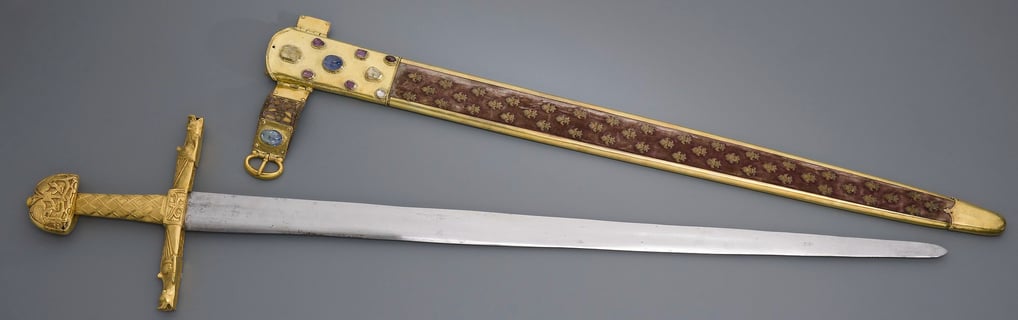
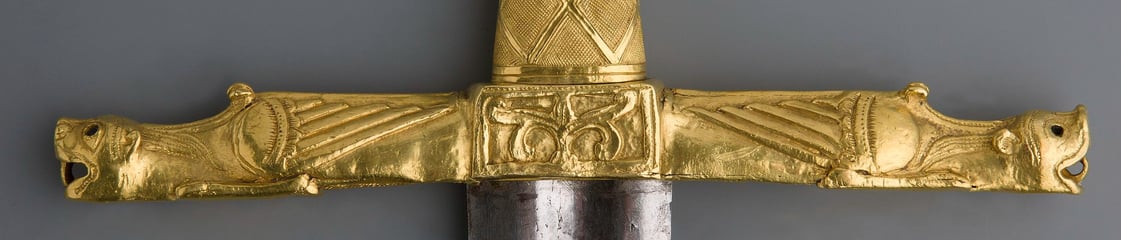
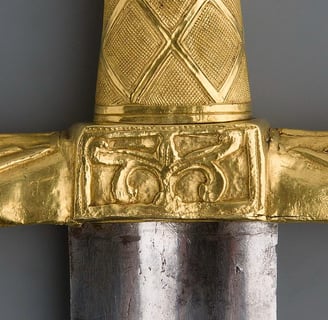
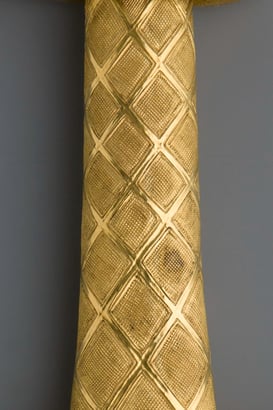
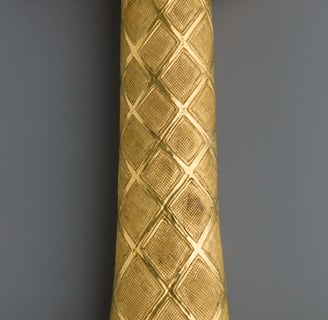
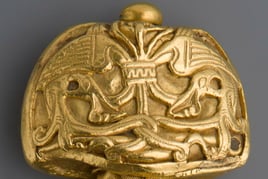
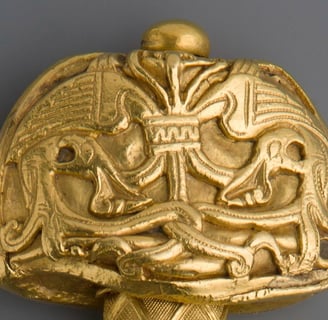
Image 1: Coronation Sword of the Kings of France: The sword of Charlemagne is named Joyeuse.
Image 2: The interlacing on the pommel.
Image 5: The diamonds on the grip date from the 13th or 14th century.
Image 3: The marvelous animals on the crossguard.
The Sword: Icon of the Middle Ages
An emblematic symbol of the Middle Ages, the sword is the favored weapon of knights, celebrated in the literature and epics of the era. It plays a pivotal role in the education of young nobles, used both for warfare and for entertainment such as tournaments. The sword is laden with symbolism: it embodies virtues, represents the divine word, and is associated with holy figures, such as Saint Paul or Saint Martin. It is also a symbol of power and justice, presented by the pope to sovereigns as a mark of honor. A vehicle for courage and marvels, it can also symbolize violence, as in the assassination of Thomas Becket.
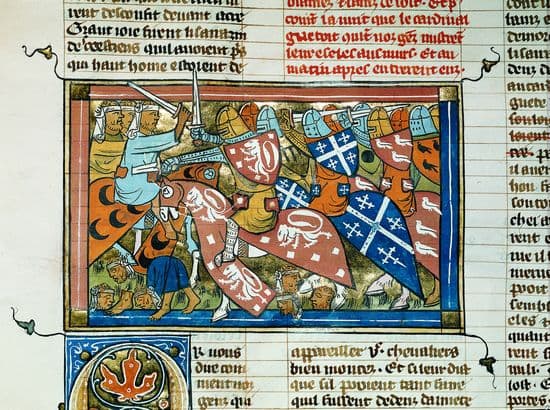
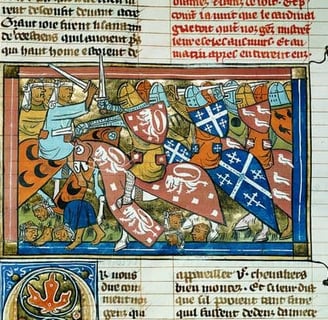
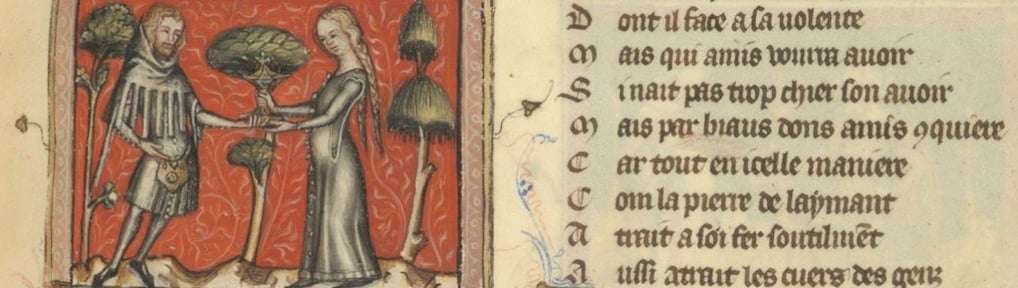
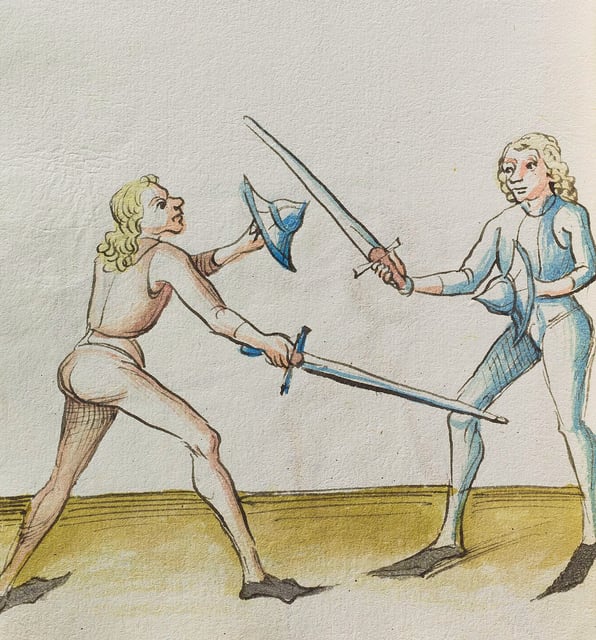
Image 11: Knights on Crusade: Knights fighting during the First Crusade. 11th-century illumination.
Epic poem, composed from the 11th to the 13th century in decasyllables or Alexandrines gathered in assonanced stanzas, celebrating the deeds of historical or legendary heroes.
Image 12: Classics of Literature: Courtly Literature
In the 12th and 13th centuries, a new way of living, loving, and expressing them spread across Europe, laying the foundation for an entire body of literature. Troubadours in the south and trouvères in the north created a musical lyrical poetry, the “grand chant courtois,” and a narrative poetic form, the “roman”.
Image 13: Its handling is part of the education of the young noble.
Through its history and varied forms, the sword tells the daily life and beliefs of the men and women of the Middle Ages, remaining a powerful symbol of this period, with famous examples such as Joyeuse, attesting to its unaltered significance through the centuries.
II. Charlemagne’s Sword, King of France
Throughout the ages, the sword attributed to Charlemagne, named Joyeuse, has undergone numerous modifications, ranging from the 10th to the 19th century. The interlaced patterns on its pommel reflect the Scandinavian style of the 10th and 11th centuries, while the fantastical creatures on the quillon are reminiscent of the 12th century. The diamond patterns on the hilt belong to the art of the 13th or 14th century. Although its blade was forged during the Middle Ages, the exact period remains undetermined. As for the scabbard, while the gem-decorated plate dates from the 13th century, the velvet covering was restored in 1825. Given that Charlemagne was crowned in the year 800, the oldest parts of Joyeuse postdate him, implying that the sword was assembled after his death. This chronological inconsistency was likely unknown to subsequent monarchs, and would have mattered little to them. What counts above all is Joyeuse’s symbolic value; it represents Charlemagne. Therefore, the monarch possessing this sword asserts their legitimacy, aligning themselves with the emperor, an emblematic figure of the foundations of French monarchy.
see image 1, 1bis, 2, 3, 4, 5 and 6.
Gem: A hard stone considered to be precious.
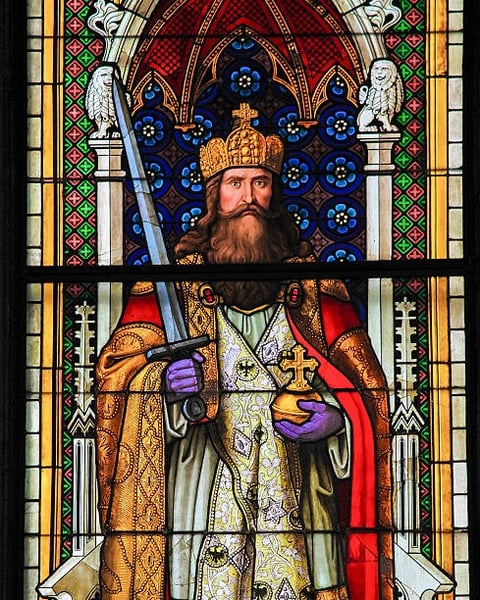
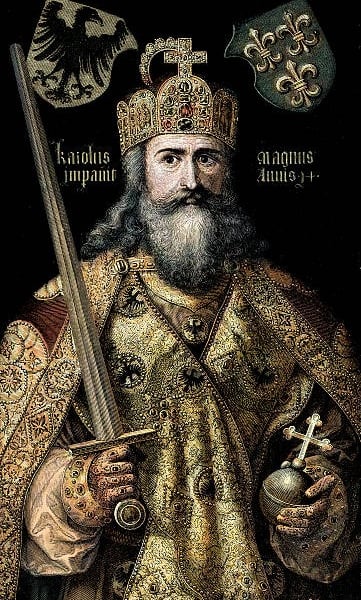
Image 1bis: Charlemagne and His Prestigious Sword Joyeuse.
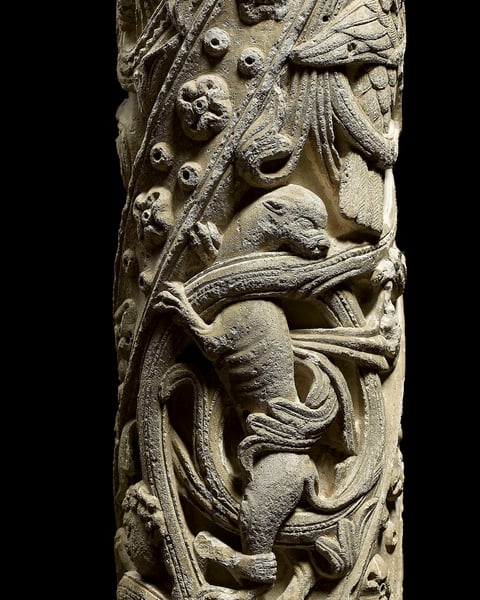
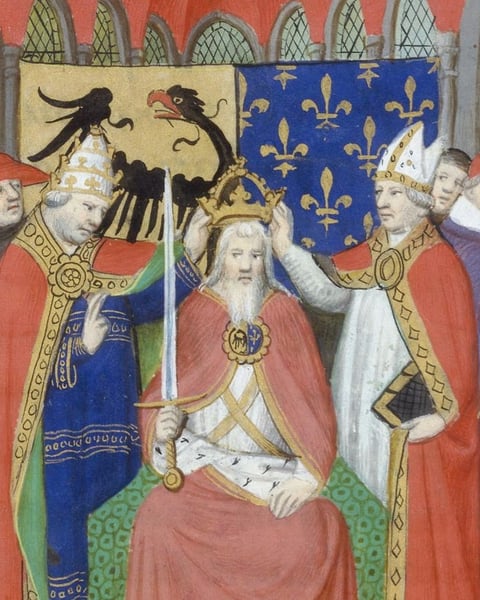
Image 4: Marvelous animals typical of the 12th century.
Image 6: Charlemagne was crowned emperor in the year 800.
Legendary Swords and Their Personification
Joyeuse, Durandal, and other prestigious swords, whether associated with historical figures or legends, all bear names, endowing them with a mythical, sometimes supernatural aura. These weapons are not mere objects; they become living symbols, intertwining their fate with that of their bearers. Charlemagne, for instance, is often depicted with Joyeuse, his trusty weapon, reflecting a medieval tradition where objects, such as church bells or blacksmith hammers, are named and blessed by a priest before their first use.
See image 1 and 14.
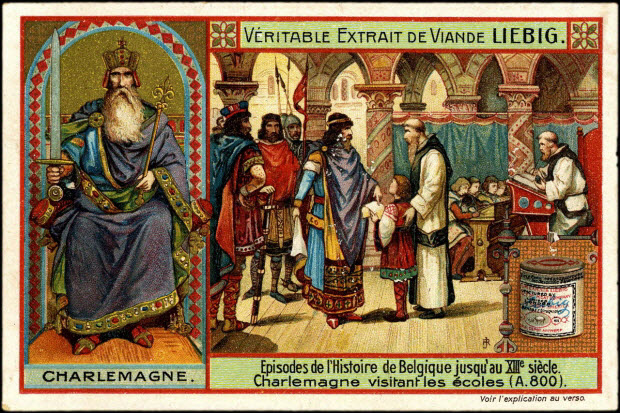
Image 14: popular art
Joyeuse: A Sacred Sword of Power.
Joyeuse is more than a sword; it is part of the regalia, symbolic objects of French royal authority. The coronation of the king, reminiscent of Clovis’s baptism in Reims, anoints him as the divine representative on Earth, during a ceremony in which the symbols of knighthood are bestowed upon him. Possibly used as early as the coronation of Philip Augustus in 1179, Joyeuse is officially recorded from the coronation of Philip III the Bold in 1271. As a dynastic sword linked to Charlemagne, it bears witness to royal continuity, present at every coronation until that of Charles X in 1825. Preserved in Saint-Denis among the regalia, Joyeuse survived the upheavals of the French Revolution and was eventually transferred to the Louvre in 1793, thus continuing to embody the heritage and tradition of the French monarchy.
See image 7, 8, 9 and 6bis.
Regalia: A set of emblematic instruments of a monarchy, used during the coronation ceremony (liturgical instruments, garments, insignia…). The crown, scepter, and hand of justice, the quintessential symbols of power, are the main components.
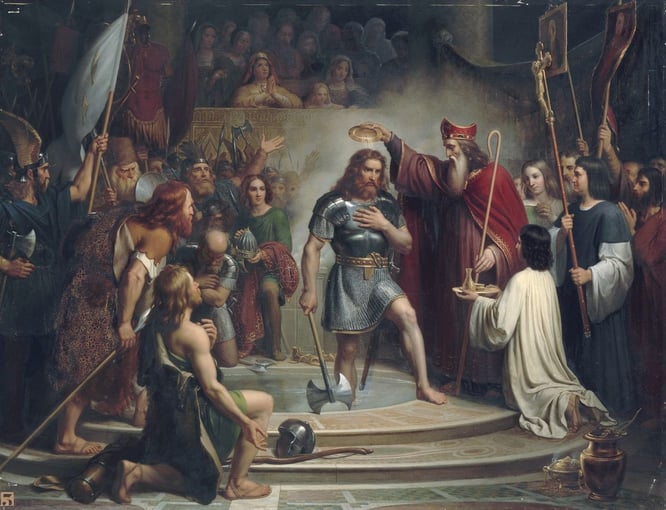
Image 7: Baptism of Clovis at Reims, December 25, 496.
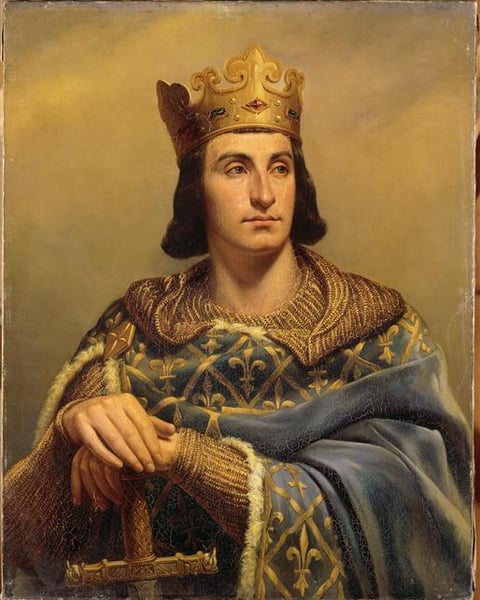
Image 8: Philip II, known as Philip Augustus, King of France (1165-1223).
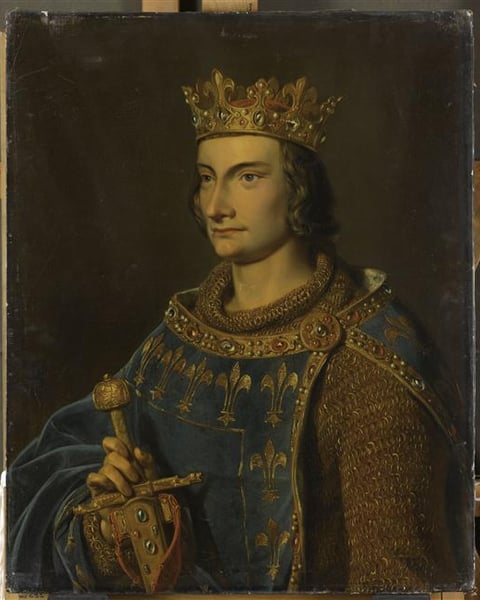
Image 9: Philip III (1245-1285), King of France, known as the Bold.
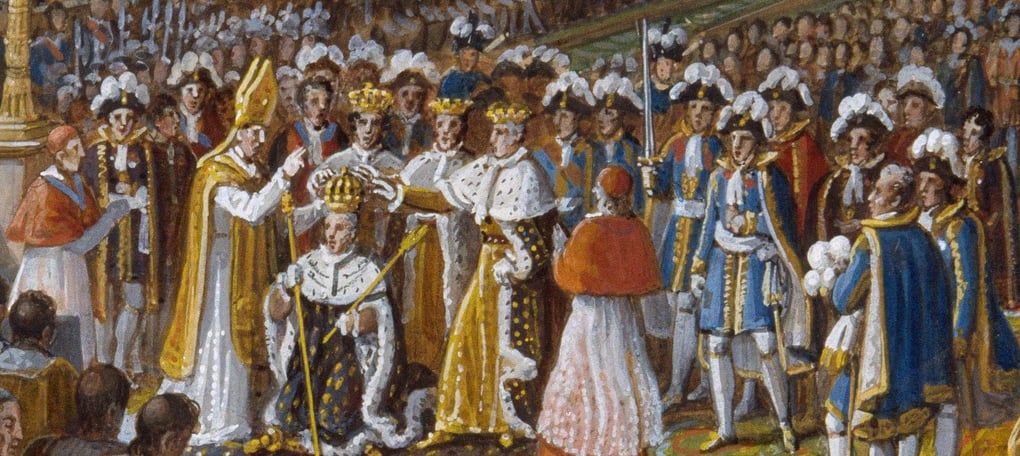
Image 6bis: It was present at all subsequent ceremonies up to the last one, that of Charles X in 1825.
Throughout the Middle Ages, the sword evolved from simple forged iron tools into highly specialized works of art, reflecting technological advancements and the ideals of the times. Charlemagne’s sword, beyond its historical or mythological existence, symbolizes the grandeur and unity of the Frankish kingdom under the reign of the first crowned emperor of the Holy Roman Empire, embodying the chivalric virtues of courage, faith, and justice.
The medieval sword, in form and essence, transcends its function as a mere weapon to become an emblem of power, law, and honor. The legend of Charlemagne’s sword, in particular, encapsulates the idealization of these knightly values and remains a powerful symbol of European cultural and historical heritage.
We invite you to delve deeper into the fascinating history of the medieval sword and the legendary sword of Charlemagne through our articles, analyses, and narratives. Join us to uncover the secrets of these legendary blades that have shaped history and continue to inspire the imagination.
#MedievalSwords #Charlemagne #FrenchHistory #WeaponCraftsmanship #KnightsAndKings #MiddleAges #SteelLegends
