
The Dawn of Art in Gaul: First Mediterranean Influences
Dive with us into the dawn of art in Gaul, a fascinating period where the historical and cultural context indelibly shaped the artistic expression of this region.
Faluns of Anjou Art
During this era, Gaul was not just a crossroads of peoples and traditions but also a recipient of Mediterranean influences. These influences, brought through trade and cultural interactions with civilizations such as Egypt, Greece, and Rome, planted the first seeds of what would become a rich artistic heritage. Our exploration will reveal how these early contacts infused local art with new techniques, styles, and motifs, thereby laying the foundations of Gaul's artistic identity. Join us on this journey through time to discover how Gaul absorbed and transformed these Mediterranean influences to create a distinctive and captivating art.
2. Ancient Egyptian Sculpture
If the essential function of art is to serve religion, it is therefore primarily symbolic. Indeed, everything is symbolic: colors, plants, the size of characters, animals...
Art for Eternity
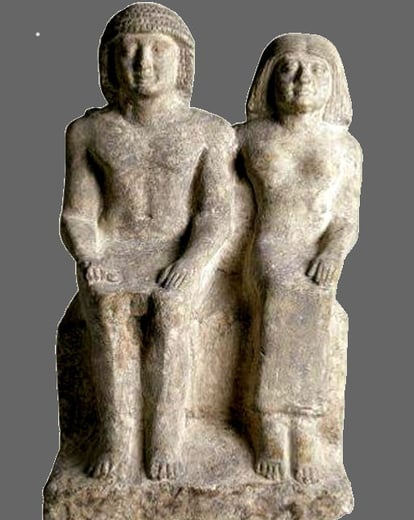
The greatest masterpieces of Egyptian art come from discovered tombs. This is no coincidence: art serves the deceased in their afterlife. A statue of a deceased person helps guide them to the afterlife: when the soul leaves the perishable body, it inhabits the eternal statue. A sculpture is as alive as the person it represents. Therefore, it is crucial that it honors them. A deceased will always be depicted relatively young, in good health. This is an idealized representation. The more important the deceased is in society, the larger their representation will be. Their servants are always depicted smaller than them. Conversely, their protectors and gods, larger, to honor them and intercede on behalf of the deceased.
The sculpture must always evoke movement or action, as a static representation would condemn the deceased to eternal immobility. On sculptures of soft stone, a man is always painted with a darker complexion than a woman, as he represents the outside, while she represents the inside. Lastly, any sculpture representing the deceased bears a cartouche with their name and titles.
The Narmer Palette (circa 3150 BC) is a two-sided ceremonial limestone plaque, intricately carved with scenes of the unification of Upper and Lower Egypt by King Narmer. The importance of symmetry is evident in the composition which presents the heads of four bulls (a symbol of power) at the top of each side and a balanced representation of characters telling the story. The work is considered a masterpiece of early dynastic period art and shows how sophisticated Egyptian artists were at that time.
A Couple of Notables, formerly polychrome limestone, Old Kingdom, 4th-5th dynasties, circa 2620-2350 BC, Museum of Fine Arts, Lyon, France
1. The Mediterranean Origins of Gaulish Art
The birth of Gaulish art cannot be separated from its Mediterranean roots, stemming from complex and enriching interactions with the great civilizations of the Mediterranean. This part of our exploration begins with the period when the Gauls started establishing commercial and cultural contacts with Mediterranean peoples, notably the Egyptians, Greeks, and Romans.
The First Commercial and Cultural Contacts
The expansion of Mediterranean maritime trade opened the way for exchanges between the Gauls and Mediterranean cultures.These trade exchanges were not limited to material goods but also included the transfer of knowledge, ideas, and practices.
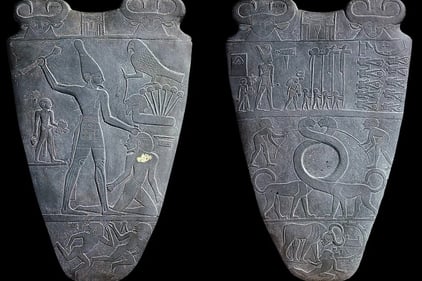
The Narmer Palette (both sides) - Unknown Artist (Public Domain)
3. The Influence of Greek Colonies
- The establishment of Greek colonies, such as Massalia (modern-day Marseille), played a key role in introducing Greek artistic techniques and styles into Gaul.
- Greek pottery, sculpture, and decorative motifs began to influence Gaulish craftsmanship.
Heterogeneous Origins
Several cultural hubs emerged before coexisting and merging into Greek civilization. Cycladic culture developed in the Aegean Sea islands, mainly those between the mainland and Crete from the Neolithic period. The same is true in Crete, where the Minoan civilization flourished. Later, the Mycenaean culture appeared in the Peloponnese. This conquering nature extended its territory to Crete after establishing a foothold in the Cyclades. The Dorian invasion around 1200 BC ended these three cultures and led to what is called "the dark period," after which ancient Greece took off.
Unlike ancient Egypt, there is no artistic continuity. Each primal culture had its own mythology, rites, and modes of representation. Artistic unity is established from the Archaic period, as the civilization hub is relatively homogeneous.
A Progressive Liberation of the Body
The representations from the archaic period are often frontal. They sometimes appear a bit rigid. However, there is a very good mastery of materials thanks to the finesse of the modeling. To counter the imbalance of masses, Greek sculptors were forced to adjoin a sort of support to the characters, often a trunk or a rock. However, the representations become increasingly naturalistic. They are all attempts to approach an ideal beauty, which only the gods can engender.
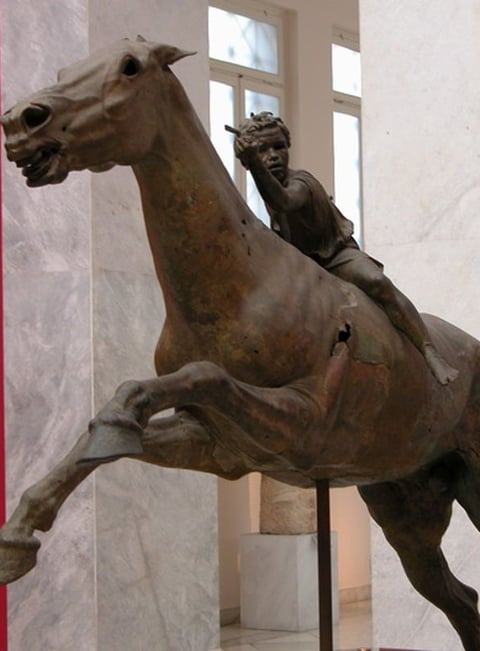
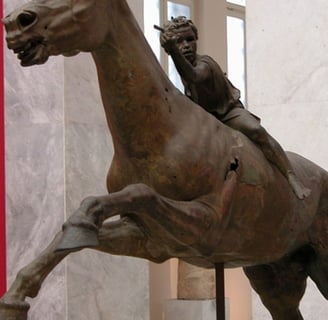
Artemision Bronze, hollow bronze, -140, National Archaeological Museum, Athens, Greece - image: SBD
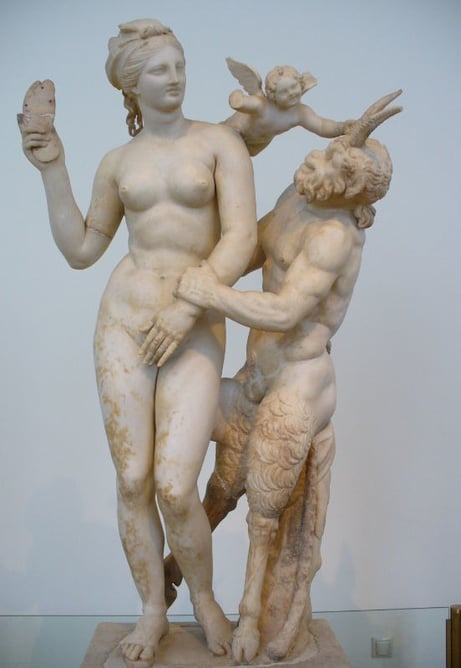
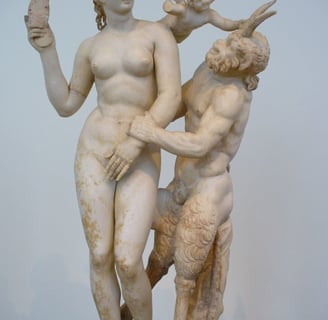
Aphrodite, Eros, and Pan, marble, -100, National Archaeological Museum, Athens, Greece - image: SBD(photo)
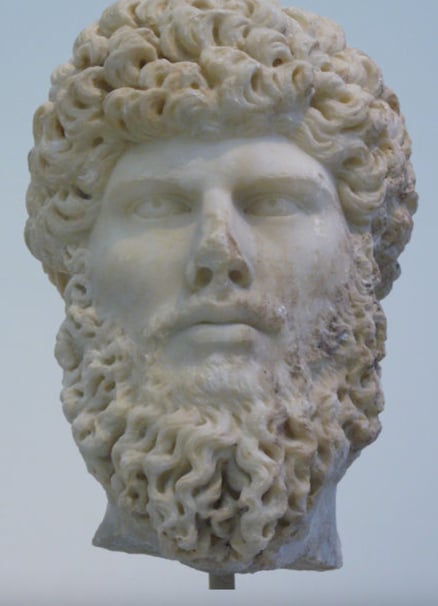
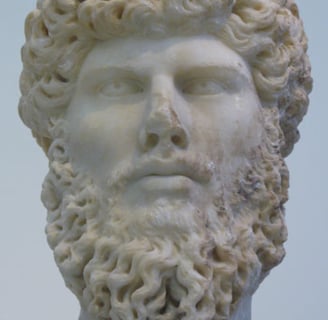
Head of Emperor Lucius Verus. marble, ~155, National Archaeological Museum, Athens, Greece - image: SBD(photo)
4. The Romans as Cultural Catalysts
- The arrival of the Romans brought a new wave of artistic influences.
- Roman art, with its advanced construction techniques, sculpture, and mosaics, had a significant impact on the evolution of Gaulish art.
Roman Sculpture in Antiquity
The number of copies of Hellenic works shows the influence of Greek aesthetics on Roman sculpture. It is frequent that these copies have survived their Greek model. But it also benefited from other influences, such as the Etruscans, not to mention the many vernacular specifics of the Empire that the Romans assimilated.
From Greek sculpture, Roman civilization mainly retained naturalism. However, it is more realistic. It does not seek to idealize its subjects but to represent them as they are, even if some traits may seem unattractive (for example, depictions of Emperor Claudius). Moreover, it focuses more on depicting Man and his personality, as well as the values of the citizen: gravity, authority, dignity. Thus, it is more in the service of power and a certain propaganda. With the invention of the bust, the aristocracy boasts its origins with portraits of ancestors. As for the emperor, it allows him to spread his image throughout the provinces of the Empire, thus showing his presence, therefore his authority, and power. Expressive representations of defeated or dying barbarians are also made, suggesting the fate reserved for peoples rebellious to imperial authority.
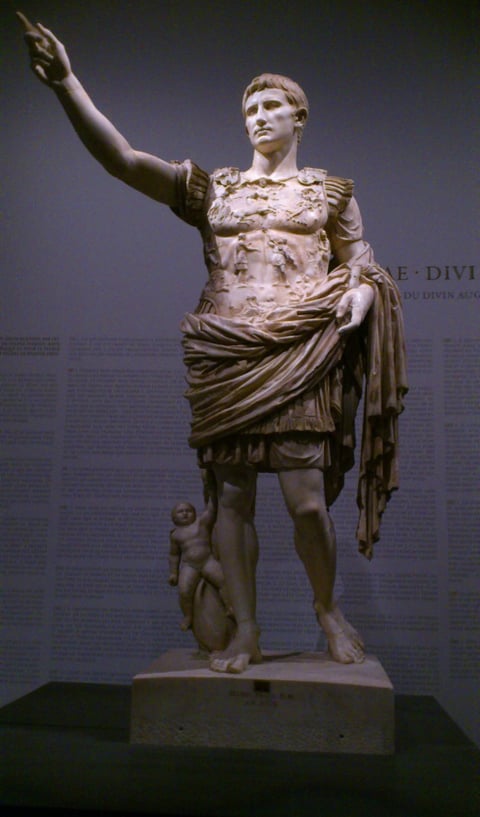
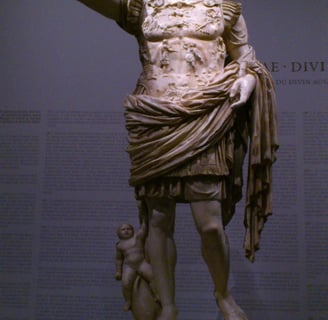
Anonymous, Augustus of Prima Porta, c. 14 BC, Parian marble, 2.07 m., Vatican Museums, Rome, Italy (photo)
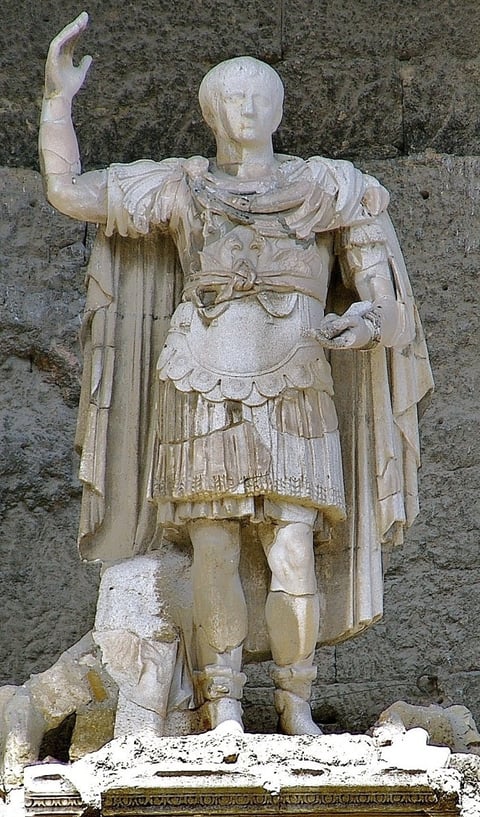
Anonymous, statue of Augustus, 1st century BC, marble, 3.55 m., Antique Theater, Orange, France (photo)
5. Synthesis of Mediterranean Influences
- Gaul absorbed and reinterpreted these Mediterranean influences, integrating them into a distinct local artistic framework.
- This synthesis gave birth to unique art forms, mixing Mediterranean traits with indigenous Gaulish characteristics.
Gaulish art, shaped by Mediterranean influences and enriched by its own originality, represents a captivating chapter in the history of art. These cultural interactions not only introduced new techniques and styles to Gaul but also gave birth to a unique art, merging external influences with indigenous traits. This journey through Gaulish art demonstrates the importance of dialogue between different cultures in creating a lasting and diverse artistic heritage.
Dive deeper into the fascinating world of Gaulish art and discover how it laid the foundations of French artistic identity. Follow our blog for more insights into the impact of cultural exchanges on art, and join a community of art history enthusiasts. Subscribe now to not miss our upcoming artistic explorations, where history, culture, and art meet.
#GaulishArt #ArtHistory #MediterraneanInfluences #CulturalDialogue #Subscribe #ArtHistoryPassion
