
The Evolution of Romanesque to Gothic Art in Medieval France
Welcome to our in-depth exploration of two emblematic periods of medieval art in France: Gothic and Romanesque art.
Faluns of Anjou Arts
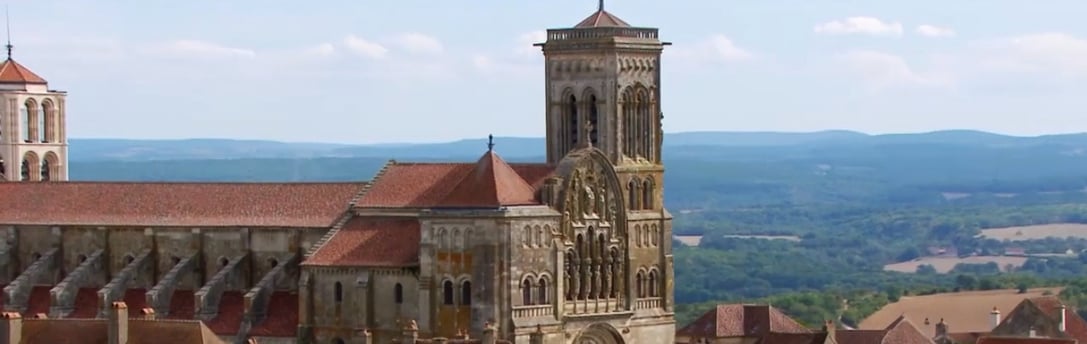
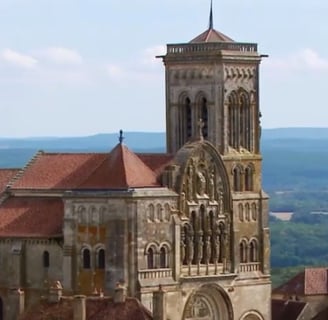
Welcome to our in-depth exploration of two emblematic periods of medieval art in France: Gothic and Romanesque art. Although these two styles originate from the same medieval root, they offer fascinating contrasts and bear witness to the cultural and architectural evolution of France during the Middle Ages. Romanesque art, known for its massive structures, round arches, and sculptural decorations, embodies the robustness and spirituality of its era. In contrast, Gothic art, which emerged later, dazzles us with its towering cathedrals, colorful stained glass, and ribbed vaults, symbolizing a leap forward in engineering and aesthetics. In this series, we delve into the heart of these two artistic movements, exploring their origins, distinctive characteristics, and their indelible impact on French cultural heritage.
What are the distinctive features and major developments that differentiate Romanesque art from Gothic art in medieval France, and how do these two styles reflect the cultural, social, and technological changes of their time?
1 The Beginnings of Romanesque Art: Birth of an Architectural Style
Romanesque art in France, which flourished from the 11th to the 12th centuries, is characterized by distinctive elements that reflect the values and aspirations of the medieval era. Here is an overview of its main features:
Robust and Functional Architecture: Romanesque buildings, often churches and abbeys, are distinguished by their solidity and massiveness. Thick walls, buttresses, and round arches are typical elements, designed to support heavy stone vaults.
The tympanum of the Abbey Church of Vézelay is considered one of the masterpieces of Romanesque art.
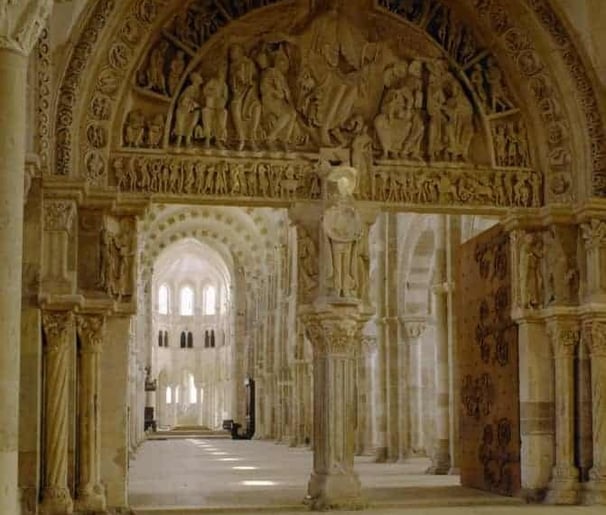
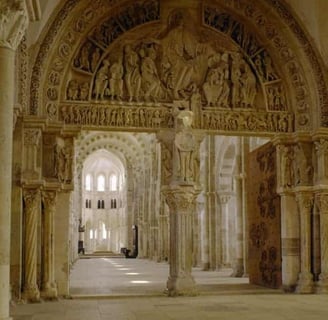
Central portal with the tympanum of the narthex (interior)
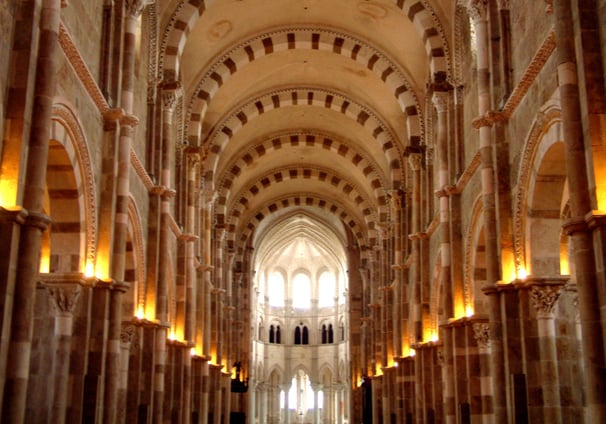
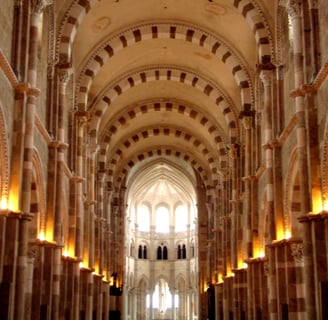
The Romanesque nave and its polychrome arches
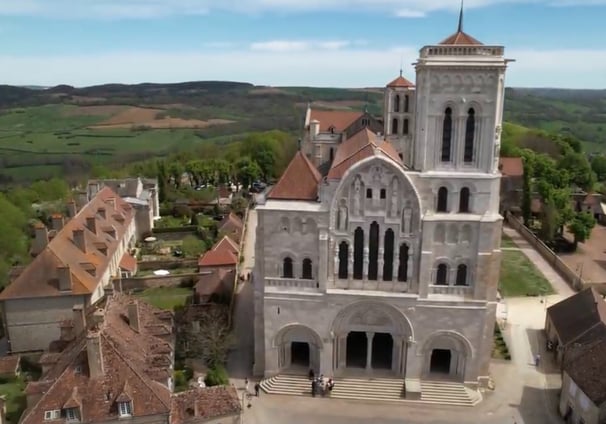
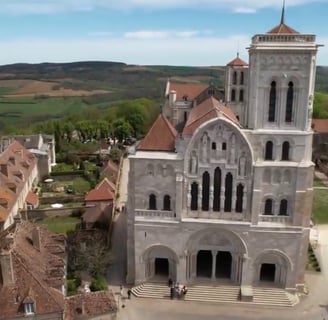
The Basilica of Vézelay, an important abbey located in the village of Vézelay in Bourgogne.
Dive into the majestic world of Romanesque art with our exploration of the tympanum of Vézelay Abbey, a UNESCO World Heritage Site. Celebrated for its exquisite execution and the richness of its decorative elements, this masterpiece embodies the essence of medieval Christian architecture. It depicts the founding myth of Pentecost, demonstrating the artistry of the period between 1120 and 1140. The high-relief work of the tympanum, its unique fan-shaped composition, and the depiction of Christ in a mandorla symbolize the intertwined traditions of Ascension and Pentecost in Christian tradition.
The scene profoundly represents divine influence, with Christ bestowing the Holy Spirit upon the apostles. The tympanum also serves as an educational tool, illustrating the Church's role in guiding the faithful through symbolic imagery. It is a grand demonstration of the medieval worldview, filled with symbolism, and serves as a calendar aligning the cosmic cycle with Christian theology. Join us to appreciate this divine representation and its profound impact on art lovers and history enthusiasts.
#TympanOfVézelay #RomanesqueArt #MedievalMastery #ChristianMythology #ArtHistoryBlog #FrenchArtTreasures #DivineImagery
Round Arches and Vaults: Unlike the pointed arches of Gothic art, Romanesque art favors round arches. The vaults, often of barrel or groin type, were a major innovation, enabling the covering of large spaces while supporting the weight of the roof.
Sculptural Decoration and Symbolism: Romanesque art is renowned for its rich sculptural decorations, especially on the capitals of columns and church portals. These sculptures, often depicting biblical scenes or plant motifs, had significant symbolic and educational reach.
Mural Painting and Frescoes: The walls of Romanesque buildings were frequently adorned with mural paintings or frescoes. These works, in vibrant colors, depicted religious scenes and served to instruct the faithful while adding an aesthetic element to the churches' sober interiors.
Use of Light: The windows in Romanesque buildings were generally small, thus limiting natural light and creating a contemplative ambiance. This moderate use of light contrasted sharply with the vast stained glass windows of Gothic buildings.
Fusion of Art and Faith: Romanesque art was closely tied to Christian spirituality. Every element, from architecture to sculpted details, was imbued with religious symbolism, reflecting the deep faith and devotion of the era.
In summary, Romanesque art in France is an expression of stability, spirituality, and technical innovation. It laid the foundations for the subsequent evolution of medieval architecture and art, deeply marking the European cultural landscape.
2. Gothic Art: Ascension to the Heavens
Gothic art, which emerged in France in the mid-12th century and flourished until the 16th century, marks a significant transition in medieval architecture, sculpture, and painting. Here are the main features of this revolutionary artistic style:
Slender and Luminous Architecture: Gothic art is distinguished by its tall and slender structures. Gothic cathedrals, with their imposing spires and flying buttresses, aimed to reach the sky, symbolizing a desire for spiritual elevation. The flying buttresses allowed the transfer of wall weight, paving the way for large windows.
Colorful Stained Glass: A major innovation of Gothic art is the extensive use of stained glass. These windows, often immense, were filled with colored glass forming biblical scenes and ornamental motifs, transforming natural light into a divine visual experience.
Embark on this extraordinary glass vessel consisting of immense bays of staggering dimensions, two-thirds of which date from the Middle Ages.
The Sainte-Chapelle is a personal commission of King Louis IX, future Saint Louis, a private chapel at the heart of his apartments in the Palais de la Cité, the first residence of the kings of France in Paris.
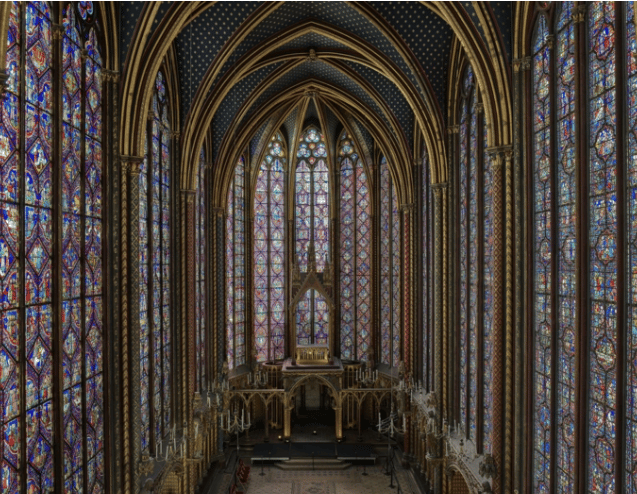
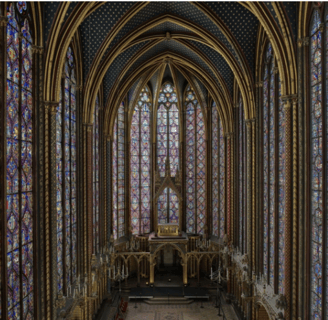
Sainte-Chapelle View from the Upper Chapel towards the Apse and the Reliquary Tribune
A Symbolic Narrative at the Service of Royalty :
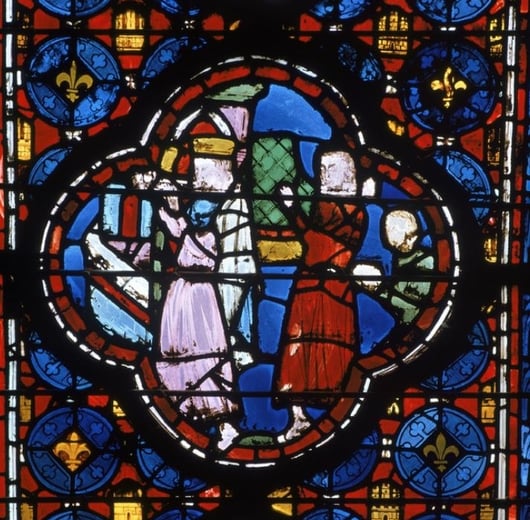
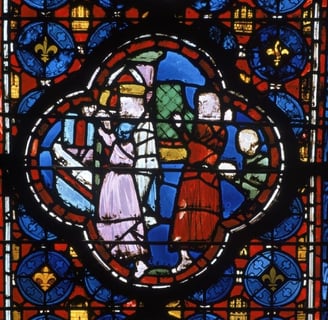
The fifteen 13th-century stained glass windows are composed of narrative panels, enameled with allusions to royalty: numerous representations of coronation scenes, backgrounds, and borders punctuated with fleur-de-lis and Castilian castles, the presence of Louis IX wearing the crown of Christ, scenes of battle and idolatry, evoke the mission the king felt invested in when embarking on the Crusades, following the consecration of the Sainte-Chapelle.
Do not imagine that the faithful in the 13th century lingered over each of the images you will discover, so there is no need to be intimidated by the multitude of historical scenes in the Sainte-Chapelle. The windows are not necessarily meant to be read but to be seen. To let light into the monument!
This is the primary interest of the Sainte-Chapelle's stained glass windows. This light, passing through the biblical message, reminds us of its divine origin. The coloring of the glass was limited to red, blue, two greens, two purples, a yellow, and some translucent pieces to facilitate chromatic coherence in this multitude of narrative medallions.
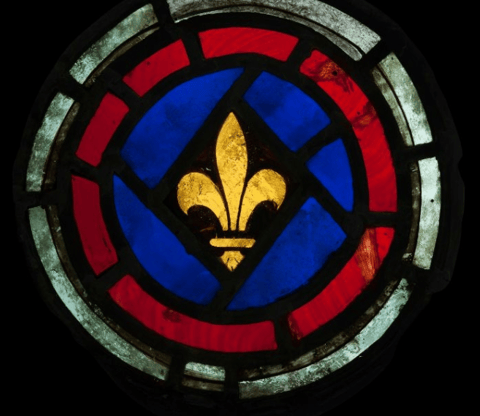
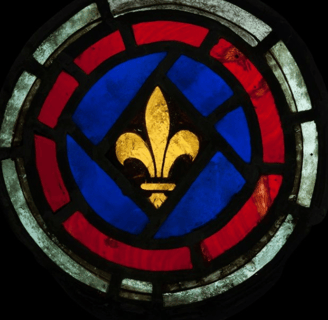
Sainte-Chapelle of Paris Detail of a Stained Glass Fleur-de-Lys
The Sainte-Chapelle, a Rich History :
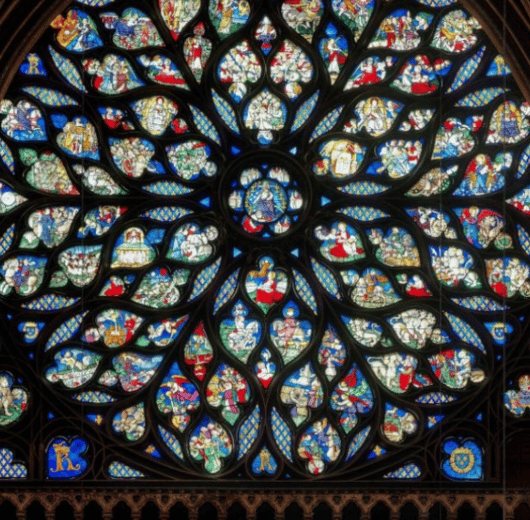
The stained glass windows of the Sainte-Chapelle present 1113 scenes. Numerous biblical pages are illustrated like a gigantic comic strip of the Middle Ages. It begins in the north with Genesis and concludes in the west with the Rose of the Apocalypse.
The Choir windows host the prophetic cycle: Daniel, Saint John the Baptist, Ezekiel, Jesse, and Isaiah surround the central window, that of the Passion, where the suffering of Christ is depicted from his arrest to Pentecost.
Scenes Presented in the Stained Glass of the Sainte-Chapelle
Sainte-Chapelle of Paris Western Rose
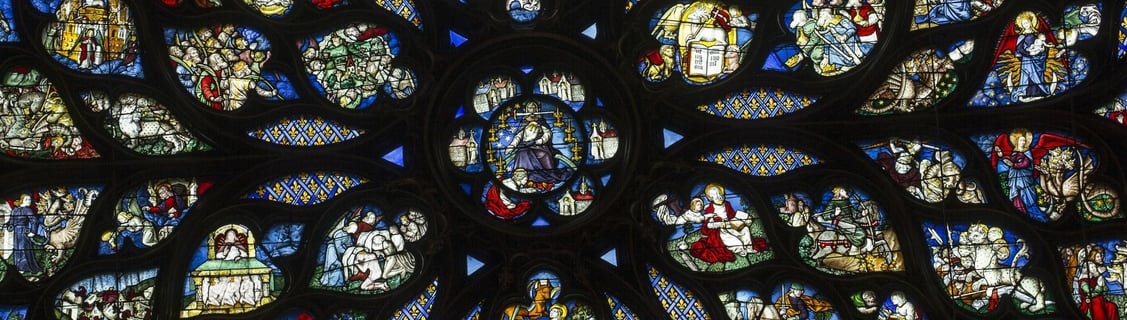
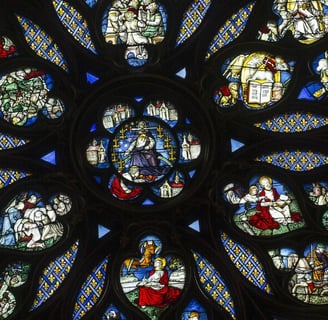
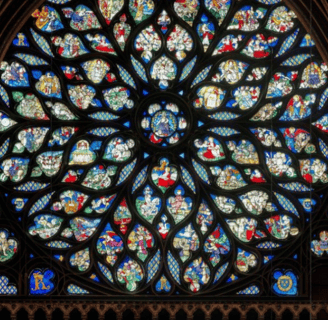
The Rose of the Apocalypse
A true masterpiece of late medieval stained glass art...
Its 9 meters width engulfs you in a beam of stone carved into complex, flame-like shapes, characteristic of the flamboyant Gothic style of the 15th century.
Sculpture and Detailed Ornaments: Unlike Romanesque art, Gothic sculpture is more naturalistic and detailed. The sculpted figures, whether on church portals or inside, are more realistic, with particular attention to human expressions and clothing details.
Use of the Pointed Arch The Gothic arch is characterized by its pointed shape. The pointed arch not only creates an impression of height but also distributes weight more efficiently than the Romanesque full-circle arch.
Ribbed Vaulting: This vaulting technique is crucial in Gothic art. It allows for a more uniform weight distribution, offering greater stability and the possibility to construct taller and more complex structures.
Richness and Diversity of Details: Gothic art is characterized by an abundance of decorative details, such as rosettes, gargoyles, and sculpted friezes, adding to the majesty and visual opulence of the buildings.
Symbolism and Educational Function: As with Romanesque art, Gothic art was heavily imbued with Christian symbolism. Every architectural element and each depicted scene aimed to teach Christian doctrines and reflect the glory of God.
In summary, Gothic art in France is a celebration of architectural and artistic innovation, reflecting a shift in spiritual and aesthetic perceptions of the time. It not only transformed the architectural landscape of France but also had a lasting impact on the further development of European art.
In conclusion, Romanesque and Gothic art represent two fundamental chapters in the history of medieval art in France, each reflecting the cultural, spiritual, and aesthetic changes of its time. Romanesque art, with its architectural robustness and deep religious symbolism, laid the foundation for artistic expression in the Middle Ages, illustrating faith and functionality. On the other hand, Gothic art marked an evolution towards bolder and loftier architecture, innovative use of light, and increased realism in human figure representation, symbolizing an era of technological progress and spiritual aspiration.
These two styles, though rooted in Christian traditions, offered distinct perspectives on the medieval world. Romanesque art, centered on stability and order, and Gothic art, seeking to transcend earthly boundaries, together shaped the artistic heritage of France. Their legacy continues not only in the magnificent buildings and artworks they left behind but also in their influence on the further development of European art. Romanesque and Gothic art are not just witnesses of the past but living forces that continue to inspire and fascinate.
Join us on an exciting exploration of French art on our blog dedicated to art history. From the enigmatic Romanesque to the dazzling Gothic, each period reveals hidden treasures of our rich cultural heritage. Subscribe now for captivating stories, in-depth analysis, and unique discoveries that will take you through the ages. Don't miss this opportunity to dive into the fascinating world of French art.
#FrenchArt #ArtisticJourney #Subscribe #ArtBlog #ArtHistory
